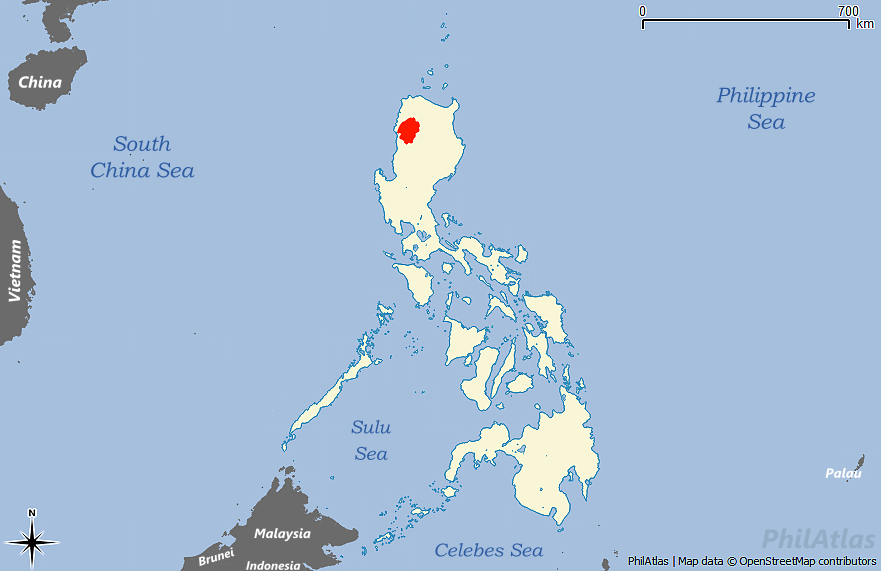
Hemmed in the towering mountain ranges of the Ilocos on the west and the Cordillera in the east. It is bounded on the north by Ilocos Norte and the south by Ilocos Sur and Mountain Province. Towards the east is Kalinga and on the west, the province of Apayao. As it straddles the Ilocandia and the Cordillera, these landlocked province is a melting pot of the lowland people of dominant Spanish ancestry and the unique ethnicity of the upland Tingguian tribe. Insulated by the Mountainous Gazebo, nature has remained prestine in Abra and life goes on in a relaxed pace away from the humdrum of urban cosmopolitan living. With a land area of 3,180.8 square kilometers, Abra accounts for one-fifth of the regions land area, the largest province in the region. It possesses the most number of municipalities (27) and barangays (324) among the seven Cordillera provinces. The seat of the provincial government is at Bangued, its capital town which is four hours from Baguio City and 10 hours from Manila.